




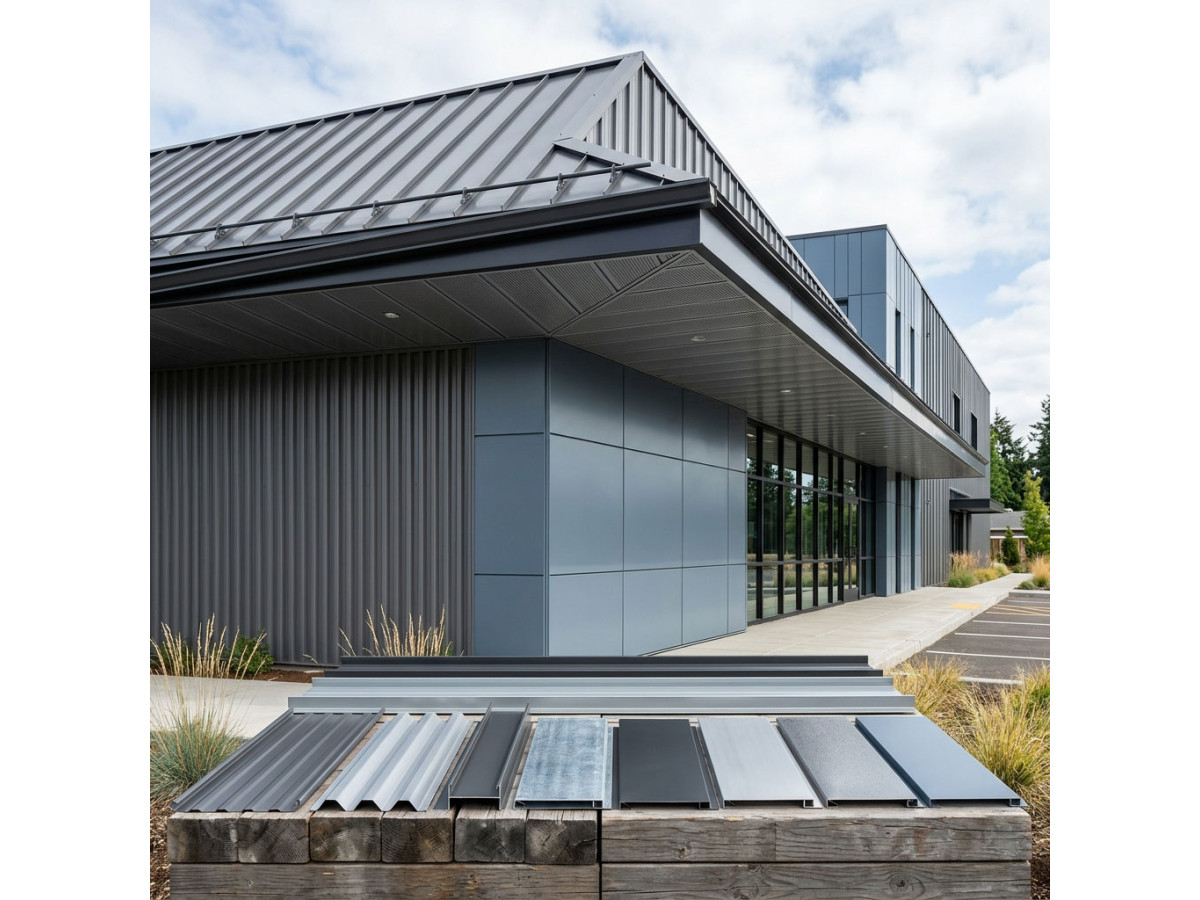
One hydraulic production system for roofing, siding, wall and soffit panels — designed for both workshop production and mobile manufacturing at construction sites.
For a roofing contractor, metal building company or panel manufacturer, buying a roll forming machine usually comes down to three questions: what products can it make, where can it be used, and how quickly can the investment pay for itself?
The SS4E-HD multi-panel Roof & Wall Roll Former from Liberty Seamless Machinery is built around that business model. It is a heavy-duty hydraulic system designed to produce standing seam roofing, snap-lock panels, siding, soffit, wall panels and custom profiles directly from coil. The current listed price is $77,800.
What Does a Multi-Profile Machine Do?
A roofing roll forming machine is often purchased for one specific panel style. That can make sense for a manufacturer with high and predictable production volume.
A multi-profile system takes a different approach. Interchangeable tooling allows one machine to be configured for different products instead of dedicating separate equipment to every profile.
- 1" Mechanical Double-Lock Standing Seam
- 1.5" Mechanical Double-Lock Standing Seam
- 1" Snap-Lock
- 1.5" Snap-Lock
- Slotted-Flange Snap-Lock
- Clip-Style Standing Seam
- Board and Batten Siding
- Flush Wall Panels
- Soffit
- Underdeck
- Custom metal panel profiles
One Machine for Roofing, Siding and Wall Panels
The value of a metal panel roll forming machine is not limited to the forming process itself. The equipment can become part of a broader production strategy.
Roofing Production
Produce standing seam and snap-lock panels for residential, commercial and metal-building projects.
Siding & Wall Panels
Expand the product range with board and batten siding, flush wall panels and other profiles.
Custom Profiles
Configure tooling for projects requiring profiles outside the company's standard product range.
Contract Production
Use available machine capacity to manufacture panels for other contractors and local builders.
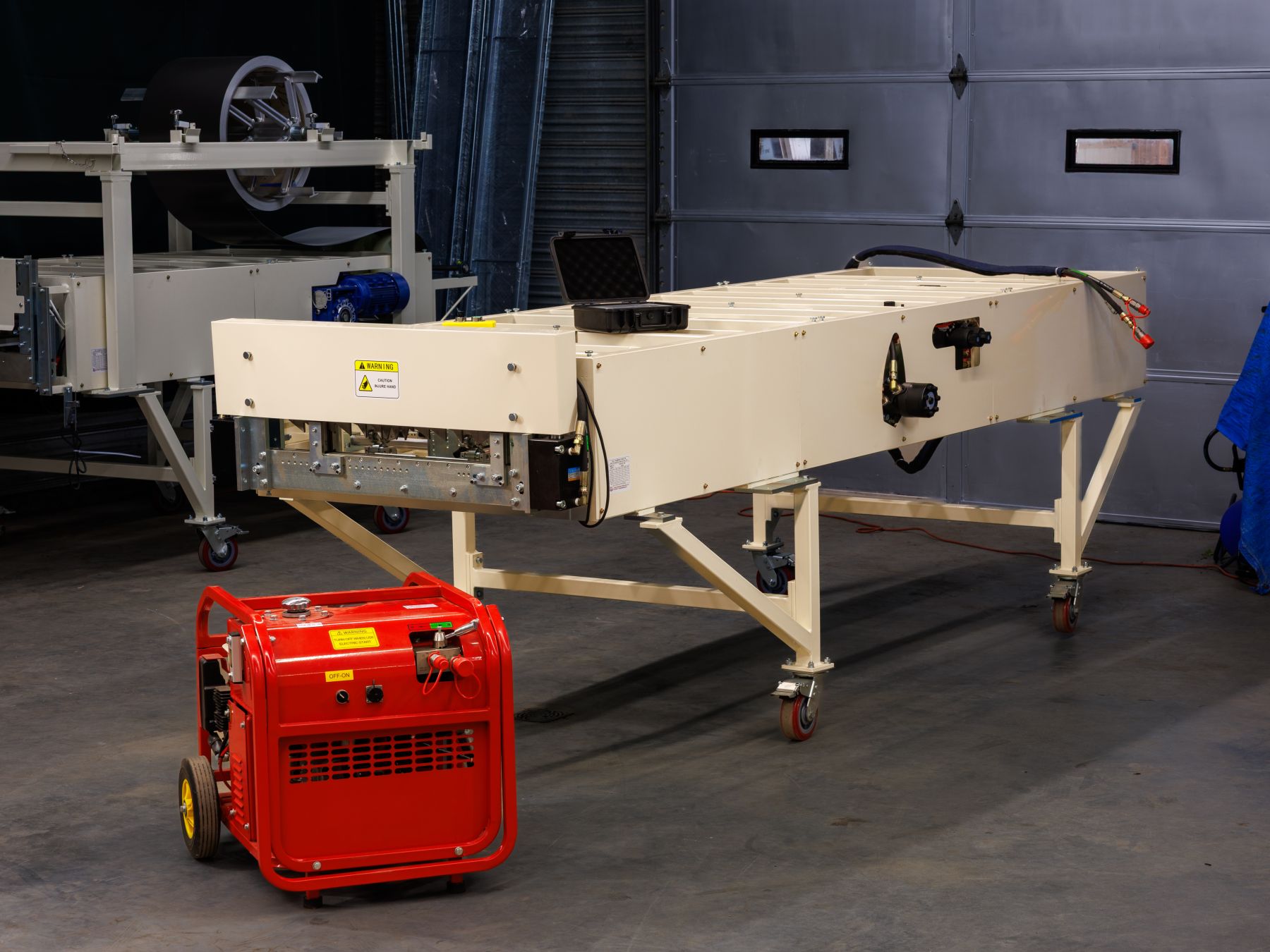
The SS4E-HD combines feeding, automatic pre-notching, roll forming and hydraulic cutting. PLC controls allow the operator to set panel length and quantity, while interchangeable tooling provides flexibility when the product mix changes.
Workshop Production
For a company with a permanent fabrication facility, the machine can be installed as part of a shop-based production line.
An electric hydraulic station can be used for workshop installations. The setup can also be combined with coil handling equipment, reel racks and a warehouse decoiler depending on production requirements.
Production at the Job Site
The SS4E-HD can also be configured for mobile production. Trailer mounting and a Honda gas-powered hydraulic system make it possible to take the production equipment to construction sites where permanent electrical power may not be available.
From Coil to Finished Panel at the Job Site
This approach can be useful for large commercial roofs, metal buildings and projects requiring long or custom-length panels.
Trailer-Mounted Roll Forming Machine for Contractors
A trailer-mounted system can turn a conventional roofing operation into a mobile production operation. The contractor can transport the equipment between projects and manufacture panels where they are needed.
Custom Lengths
Produce panels according to project dimensions rather than relying only on standard supplier lengths.
Less Finished-Panel Transport
Move coil to the project and produce panels closer to the installation point.
Multiple Projects
Move the same production equipment between commercial, residential and metal-building jobs.
Limited Power Availability
The gas-powered hydraulic configuration can support mobile operation where grid power is limited.
Mobile Production or Permanent Shop?
Shop-Based Production
- Regular panel production
- Supply to multiple contractors
- Dedicated production space
- Finished-panel inventory
- Reliable electrical power
Job-Site Production
- Multiple construction sites
- Custom-length panels
- Large roofing projects
- Reduced finished-panel transportation
- Limited access to grid power
Materials and Production Capacity
The machine accepts coil widths from 15" to 28" and produces finished panel widths from 12" to 24".
- Pre-painted steel
- Galvanized steel
- Galvalume
- Aluminum: 0.024"–0.040"
- Copper: 10–16 oz, 3/4 hard
- Steel: typically 24–26 gauge, depending on profile and configuration
The exact material and gauge combination should be confirmed for the selected profile and tooling before ordering.
Automatic Notching and Hydraulic Cutting
The production process includes more than simply forming the panel. The SS4E-HD uses hydraulic pre-notching to prepare panel ends before forming, followed by hydraulic exit shearing after the profile has been formed.
Hydraulic Drive and Controls
Hydraulic System
Heavy-duty hydraulic forming with Honda gas-powered or electric hydraulic station configurations.
PLC Touchscreen
Set panel length and production quantity from the machine control system.
Automatic Cutting
Hydraulic exit shear handles the final panel cut after forming.
Wireless Controls
Convenient machine operation for production and mobile applications.
SS4E-HD Price and Configuration
Additional tooling, trailer equipment, runout systems, power seamers and other production options can be selected according to the application.
How Does the SS4E-HD Compare With Other Models?
| Model | Listed Price | General Positioning |
|---|---|---|
| SS4E-15 | $19,000 | Standing seam production |
| SS-150 | $25,000 | Portable standing seam production |
| SS4E-PRO | $40,750 | Portable multi-profile roof & siding production |
| SS4E-HD | $77,800 | Hydraulic multi-profile roof, wall & siding production |
These machines are not direct substitutes. The SS4E-HD is positioned as the heavier hydraulic multi-profile system with automatic notching, hydraulic cutting, PLC controls and mobile or permanent installation options.
ROI: How Quickly Can the Machine Pay for Itself?
The most useful calculation for a contractor is the simple payback period. It shows how long it would take to recover the equipment investment from additional monthly contribution.
Machine investment ÷ additional monthly contribution = estimated payback period
The calculation should use contribution after material, direct labor and other variable production costs. It should not use total panel sales as if they were profit.
These are examples, not guaranteed returns. Actual payback depends on panel volume, material prices, labor, transportation, utilization, financing, maintenance and other operating costs.
How Much Monthly Production Is Needed?
Another useful way to evaluate the investment is to set a target payback period.
| Target Payback | Required Average Monthly Contribution |
|---|---|
| 12 months | $6,483 |
| 24 months | $3,242 |
| 36 months | $2,161 |
For example, if bringing panel production in-house could generate more than $3,242 per month in additional contribution, a two-year simple payback becomes mathematically possible.
The next step is to compare that target with the company's actual monthly panel volume, current supplier prices and transportation costs.
Where Can the Savings Come From?
Lower Outsourcing Costs
Reduce dependence on outside manufacturers for panels the company can produce internally.
Transportation
Move coil to the project instead of transporting long finished panels from another production facility.
Custom-Length Production
Produce panels according to project dimensions instead of relying only on standard supplier lengths.
Additional Revenue
Use available production capacity to manufacture panels for other contractors and builders.
Who Should Consider the SS4E-HD?
- Roofing contractors producing standing seam and snap-lock panels.
- Metal building contractors producing roof and wall panels.
- Siding contractors manufacturing board and batten or other siding profiles.
- Panel manufacturers supplying multiple products to contractors and distributors.
- Custom fabricators producing non-standard panels and custom metal profiles.
What to Check Before Buying
Build the Equipment Around Your Actual Projects
Before ordering, compare the machine configuration with the products you currently sell and the projects you expect to produce over the next several years.
```✓ Required panel profiles
✓ Coil width
✓ Finished panel width
✓ Material type and gauge
✓ Typical panel length
✓ Monthly production volume
✓ Workshop space
✓ Electrical availability
✓ Trailer requirements
✓ Coil handling and runout
Final Takeaway
The SS4E-HD is designed around a flexible production model. It can be installed in a workshop with an electric hydraulic station or configured for mobile job-site production with trailer mounting and a Honda gas-powered hydraulic system.
At a current listed price of $77,800, it is a significant equipment investment. The right way to evaluate the purchase is to compare that investment with actual monthly panel volume, current supplier pricing, transportation costs, labor requirements and potential revenue from additional production.
Check the SS4E-HD Configuration for Your Production
Review available profiles, tooling, hydraulic options, trailer configurations and production equipment for the SS4E-HD multi-profile roll forming system.
View SS4E-HD Machine